It’s easy to work up an appetite wandering around Sevilla. What seems like a direct route from point A to B takes you up and down numerous streets, narrow lanes, and back alleys. A 15-minute, 1.5-kilometer walk can take twice as long and twice as far. Especially when you are directionally challenged, and/or unable to follow simple directions on Google maps.
The solution seemingly is at hand. Literally.
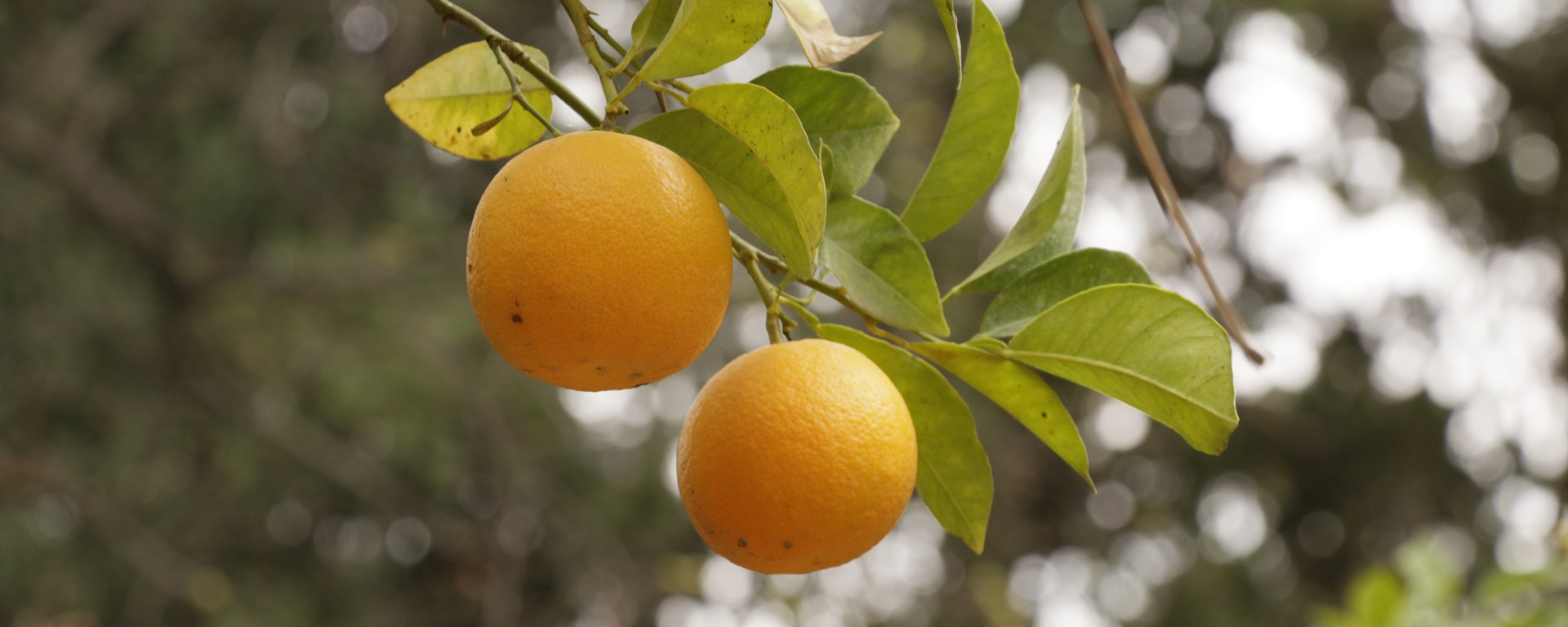
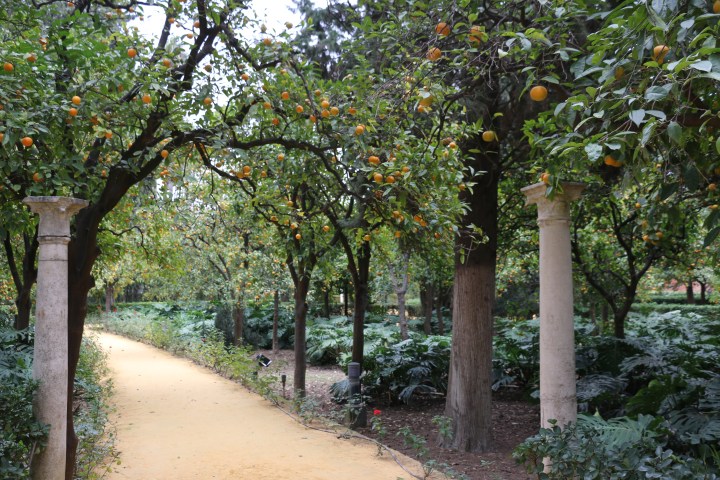 There are orange trees everywhere. Thousands of them. Tens of thousands. More than 35,000, according to Seville websites that tout the trees as part of the city’s character. The succulent fruit just hangs there, within easy reach, tempting a hungry traveler to reach out and grab one for a quick, energy-boosting snack.
Yet no one does. Not once in our first few days in this jewel of Andalusia did we see someone helping themselves. Apparently in Sevilla this isn’t free fruit, but forbidden fruit. Perhaps a city ordinance prohibits residents and visitors from helping themselves.
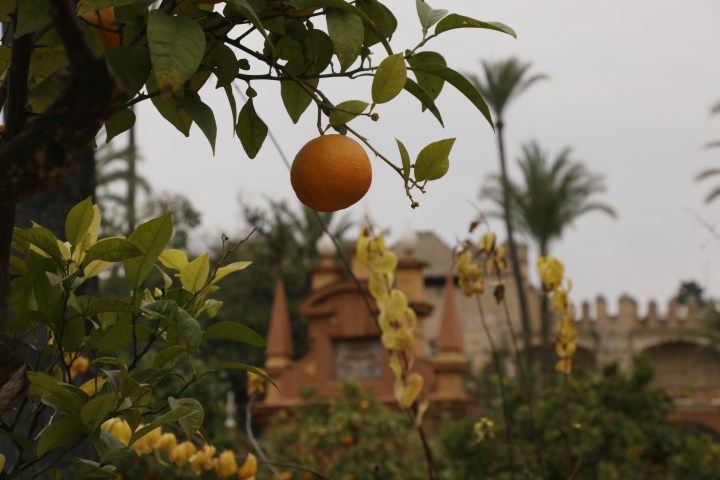 After a few hours of sightseeing at the Plaza de Espana and around Maria Luisa Park, we plopped down at a sidewalk restaurant near the Real Alcazar and Cathedral. The pavement was lined with orange trees, the branches all heavy with ripe or nearly ripe fruit.
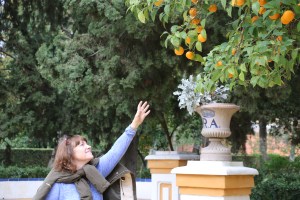
With the promise of a tasty, substantial meal just minutes away, we weren’t really tempted to try a citrus snack. But we did want to know what would happen if we tried. Would the policia suddenly descend and slap on the handcuffs? Would local residents admonish us? Would we be scorned by fellow tourists?
So Christine asked our waiter. Is it OK to pick the oranges? Our limited grasp of Spanish and his limited knowledge of English precluded a conversation, but he made the meaning clear through a quick, emphatic shake of the head. No! He then mimed why, bringing his hand to his mouth, making a biting motion, and a puckered mouth.
“Bitter!” he said.
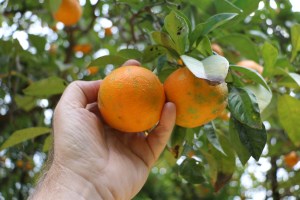
It turns out las naranjas de Sevilla are not the wonderfully tart but sweet oranges you buy at the neighborhood mercado. They are too bitter to eat.
That doesn’t mean the trees are strictly decorative. The blossoms are used in oils and lotions. The oranges are used in Beefeater gin, liqueurs, wine, chocolate, and even gunpowder. But by far the greatest consumers of Sevilla oranges are the British, who import them to use in marmalade. In fact, the word marmalade comes from mermelada, the Spanish word for jam.
So even though I won’t be peeling and eating the oranges from the many trees we’ll be walking by, I’ll have a renewed appreciation the next time I thickly spread marmalade on a piece of toast.