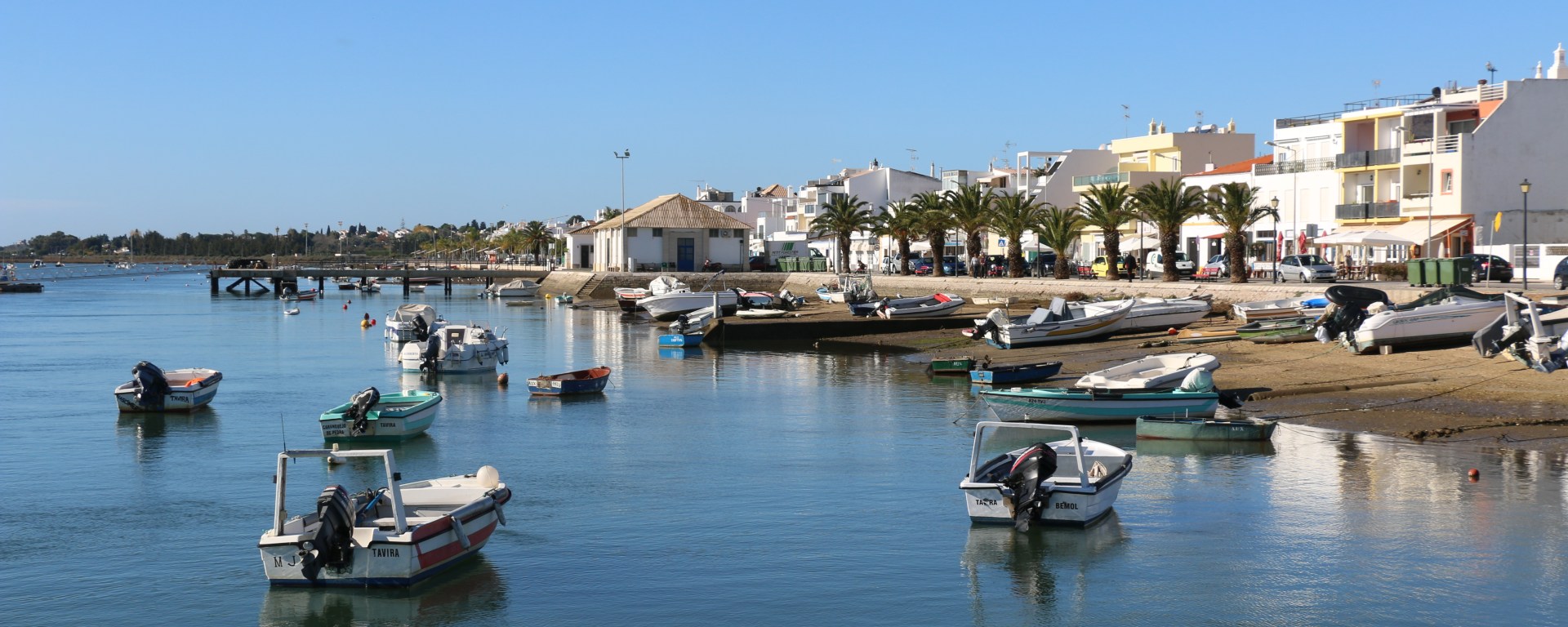
Our year-long adventure began the end of November. We wanted to pack light, and that meant looking for warm winter destinations. We also wanted to start off our year of slow travel with a laid-back location. We found what we wanted in Santa Luzia (SL), a fishing village in south Portugal.
After the tension of ending jobs, packing up our house, taking dogs to Grandma’s, and hugging grown children goodbye, this was the perfect place to start.
This village in the Algarve region is tiny–population of about 1,500, and you can circumnavigate the entire town in about half an hour. The main industry is octopus fishing–Santa Luzia is known as the “capital do polvo,” or octopus capital–and the catch of the day is served up at many waterfront restaurants.
It was dark when we arrived after an exhausting 24 hours of travel that included driving from Wilmington, N.C., to Raleigh, flights from Raleigh to JFK to Lisboa to Faro, a train to Tavira, and a taxi to Santa Luzia. Our AirBnB hostess, Alexandra, met us at the apartment, showed us how everything worked, then offered to take us on a brief walking tour of the village to show us the best cafes and restaurants and the location of the grocery store. Our first view of SL was at night, with a few restaurants open, and although the temperatures dropped rapidly in the evening, patrons were outside enjoying the fresh air.
After taking in the rooftop view atop the apartment building the next morning, we were
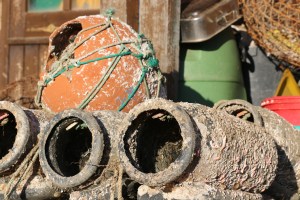
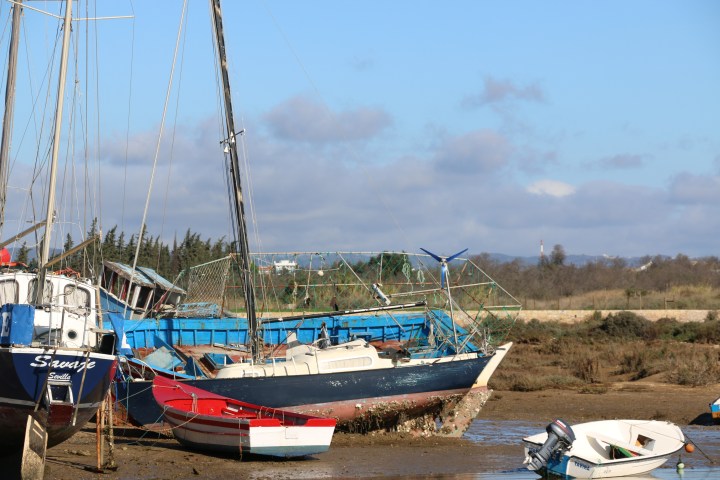
up and out with cameras in hand, and headed for coffee and pastry. We saw fisherman cleaning octopus traps, men and women playing bocce ball in the dirt court, boats of varying sizes, and a small gathering of tourists and locals. Winter is the off-season, but pleasant daytime temperatures often reaching into the mid-60s make this a haven for sun seekers and those fortunate enough to have second homes or anchored caravans nearby.
We loved walking by the small marina, seeing crusty fisherman shore up their weathered craft, meeting local sculptor Victor, and chatting with numerous visitors from the U.K. It is a little more difficult striking up conversation with locals if you don’t speak Portuguese. A waitress didn’t understand my request of mustard for my ham and cheese sandwich even though I later found out the word in Portuguese is very similar, mostarda.
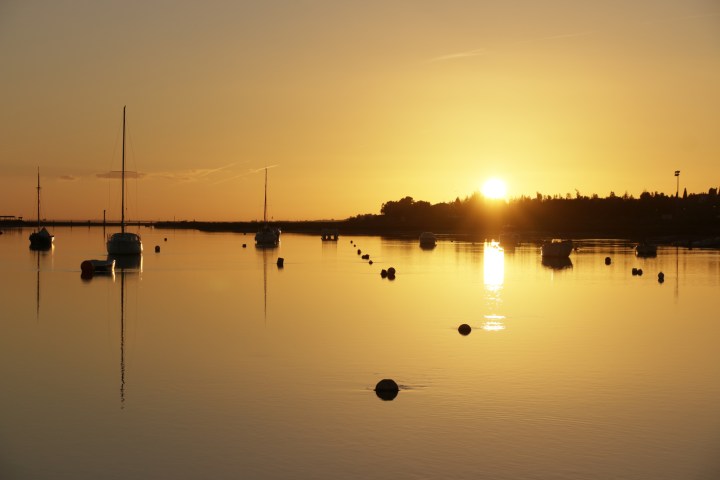
While Santa Luzia is lovely, there isn’t an abundance of attractions. But there’s plenty to do nearby. A year abroad, when you’re not numbered among the idle rich, means saving money where you can. We decided not to rent a car and instead rely on public transportation, which is still a bit of a mystery. There is allegedly a bus, but we never saw one, so we took to Shank’s mule, as Grandma Rhodie would say, and walked the 2.7 kilometers to Tavira.
There is a cobblestone sidewalk the entire length, also a bike lane for those traveling on wheels. Along the way we saw orange and lemon groves, and a large home protected by half a dozen super-sized German Shepherds.
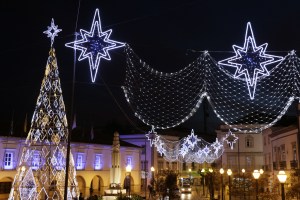
We loved our day and evening in Tavira, enjoying coffee and cake at a sidewalk cafe, touring the old castle, eating a late lunch at an Irish pub, and marveling at the beautiful Christmas lights at twilight time. It was dark when we headed back, but thankfully the sidewalk was well lit.
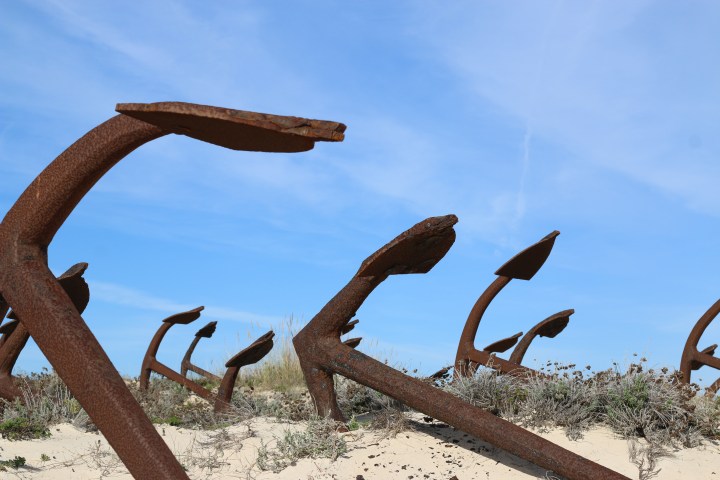
Sunday is a day of rest, but after a failed attempt to attend the local church (the 12:15 service in English promised on the sign turned out to be for another church in another town) it was back on Shank’s mule for a trek to nearby Praia do Barril (Barril Beach). In the summer the beach is crowded with tourists, but offseason means that even on a warmish December day the sands were delightfully empty.